

Turkey Tips for a Delicious, Low-Stress Thanksgiving
Start with the bird—and a simple plan
A beautiful Thanksgiving turkey does not require complicated tricks. The biggest wins come from choosing the right size, allowing enough time to thaw, seasoning ahead, and trusting a thermometer more than the clock. Pasture-raised birds can behave a little differently in the oven, so a few practical habits will help you serve a juicy, flavorful centerpiece without the last-minute scramble.
How much turkey do you need?
A useful starting point is about 1¼ pounds of whole turkey per person. Increase that amount if your crowd includes hearty eaters or if leftover sandwiches are part of the plan. For a gathering of eight, for example, a bird around 10 pounds is a reasonable baseline; choosing a little larger gives you more leftovers.
- Minimal leftovers: about 1 pound per person
- Comfortable portions with some leftovers: about 1¼ pounds per person
- Plenty of leftovers: about 1½ pounds per person
Remember that a whole bird includes bones, so the number on the label is not the amount of meat that lands on the platter.
Thaw safely—and start early
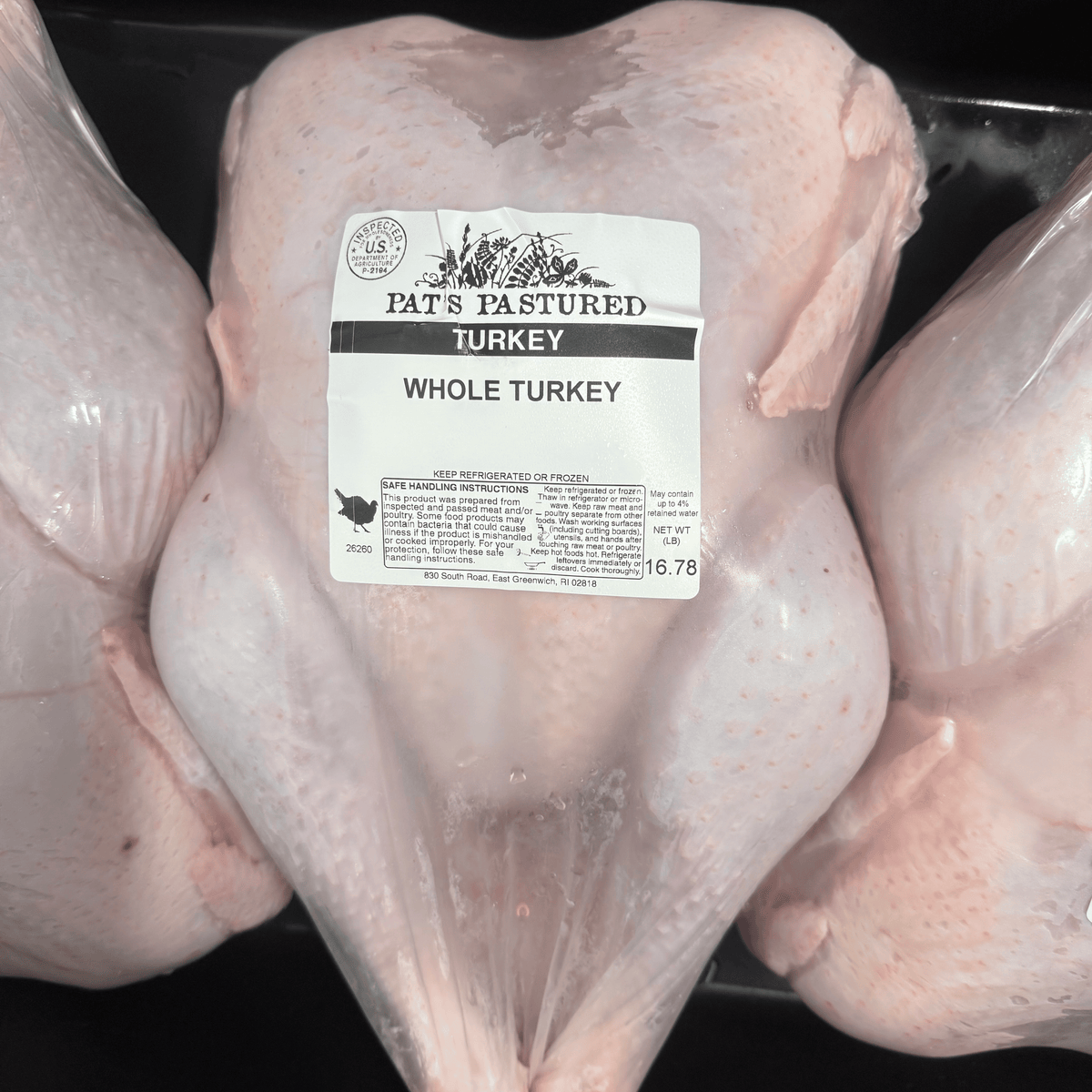
Pat’s Pastured turkeys are sold frozen. Refrigerator thawing is the safest and easiest method: leave the turkey wrapped, place it on a rimmed tray to catch any drips, and keep the refrigerator at 40°F or below. Allow about 24 hours for every 4 to 5 pounds.
- 4–12 pounds: 1–3 days
- 12–16 pounds: 3–4 days
- 16–20 pounds: 4–5 days
- 20–24 pounds: 5–6 days
Once thawed in the refrigerator, the turkey can remain refrigerated for another 1 to 2 days before cooking. Never thaw a turkey on the counter.
Need a faster option? Keep the turkey in leak-proof wrapping and submerge it in cold tap water. Allow about 30 minutes per pound, change the water every 30 minutes, and cook the bird immediately after thawing. A 16-pound turkey will need roughly 8 hours by this method.
Dry brine or wet brine?
Dry brine: simple, tidy, and crisp
A dry brine seasons the bird with salt—often mixed with herbs, pepper, or citrus zest—without a bucket of water. Apply it evenly over the turkey and, when practical, under the breast skin. Refrigerate uncovered on a rack set over a rimmed sheet pan for about 24 to 48 hours. The salt has time to season the meat, while the uncovered surface dries for better browning and crisper skin.
Wet brine: extra moisture, more logistics
A wet brine submerges the turkey in a chilled saltwater solution. It can add seasoning and moisture, but it requires a food-safe container large enough to hold the bird and enough refrigerator or cooler space to keep everything at 40°F or below. Pat the turkey very dry before roasting so the skin can brown.
Whichever method you choose, check the turkey’s label and any farm instructions first. If a bird has already been salted or seasoned, adding a full brine can make it too salty. Do not combine a strong wet brine and a full dry brine.
Why pasture-raised turkey may cook faster
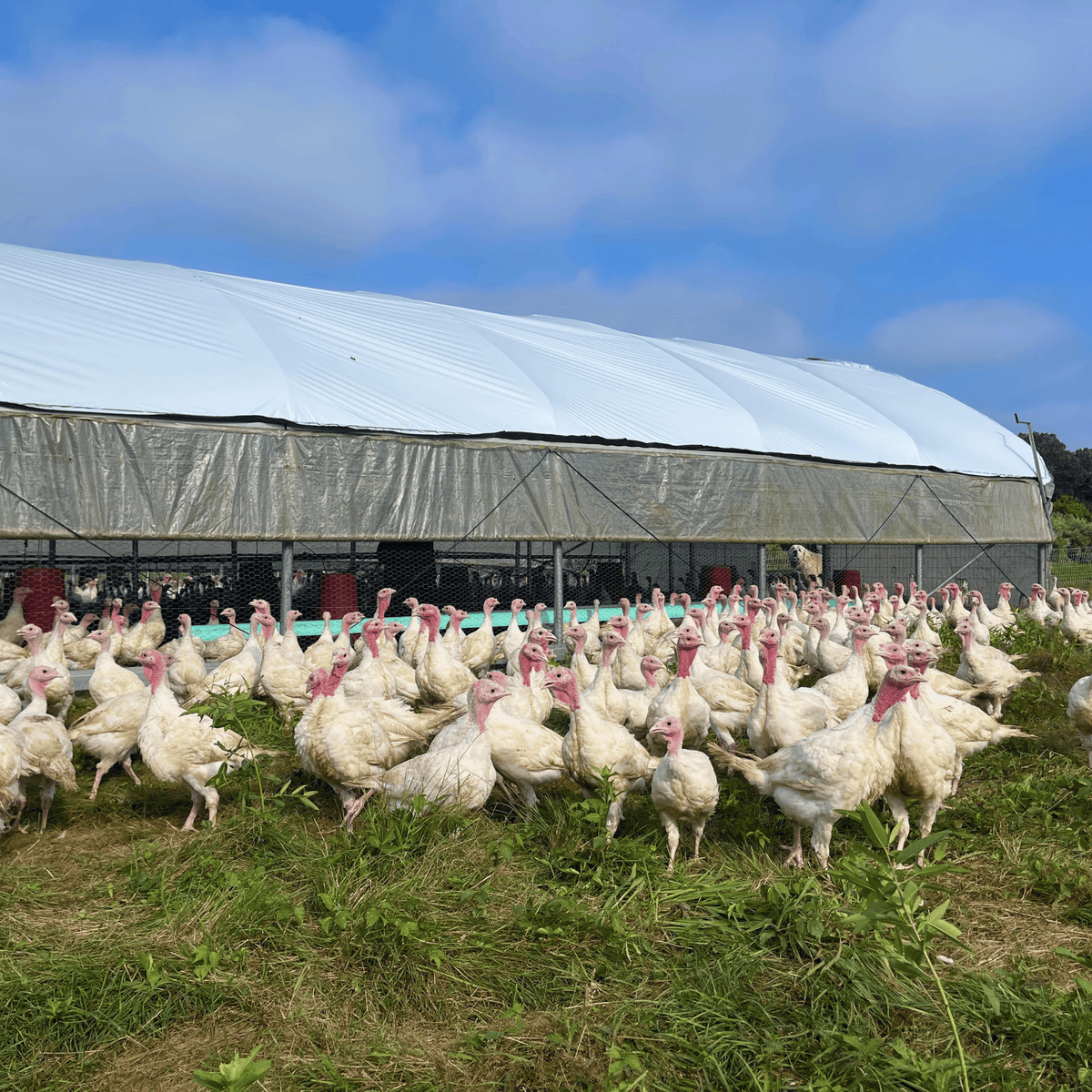
Pasture-raised turkeys tend to be active birds and may carry less insulating fat than a conventional turkey. Their body composition can be different, so they may finish sooner than a standard timetable suggests. The exact time still depends on the bird’s weight, starting temperature, oven, roasting pan, whether it is stuffed, and other variables.
The practical takeaway: use the clock for planning, but use a food thermometer to decide when dinner is ready. Begin checking earlier than you would for a conventional bird—at least 30 to 60 minutes before your recipe’s estimated finish time. Avoid cooking by minutes-per-pound alone.
A straightforward roasting plan
- Fully thaw the turkey. Remove the neck and giblets from both cavities, then pat the bird dry. Do not rinse raw turkey; splashing water can spread bacteria around the sink and kitchen.
- Season or brine as planned. If dry-brined, you generally do not need to rinse it off; brush away any heavy clumps and pat the surface dry.
- Heat the oven to 325°F unless your trusted recipe specifies another temperature. Place the bird breast-side up on a rack in a shallow roasting pan.
- For the most predictable cooking and best food-safety margin, bake stuffing separately. If you stuff the bird, the center of the stuffing must also reach 165°F.
- Roast until the turkey reaches at least 165°F in all three places: the thickest part of the breast, the innermost part of the thigh, and the innermost part of the wing. Keep the thermometer tip away from bone.
- If the skin browns before the meat is ready, loosely tent the browned area with foil. Keep checking the temperature rather than extending the cook automatically.
- Rest the cooked turkey for at least 20 minutes before carving. A larger bird can rest longer, loosely tented, while you finish the sides.
Temperature beats timing
Roasting charts are estimates, not finish lines. Oven calibration, pan material, bird shape, and how often the oven door opens can all change the cooking time. A reliable instant-read or leave-in thermometer is the best tool on Thanksgiving Day.
For food safety, the USDA minimum for whole turkey is 165°F. Check the thickest breast area, the innermost thigh and wing, and the center of any stuffing. If one spot is below 165°F, continue cooking and check again. Letting the bird rest improves carving and allows the juices to settle, but resting is not a substitute for reaching a safe temperature.
Rest, then carve
Give the turkey at least 20 minutes out of the oven before carving. This pause gives the juices time to redistribute and frees the oven for reheating side dishes. Keep the bird loosely tented; wrapping it tightly traps steam and softens the skin.
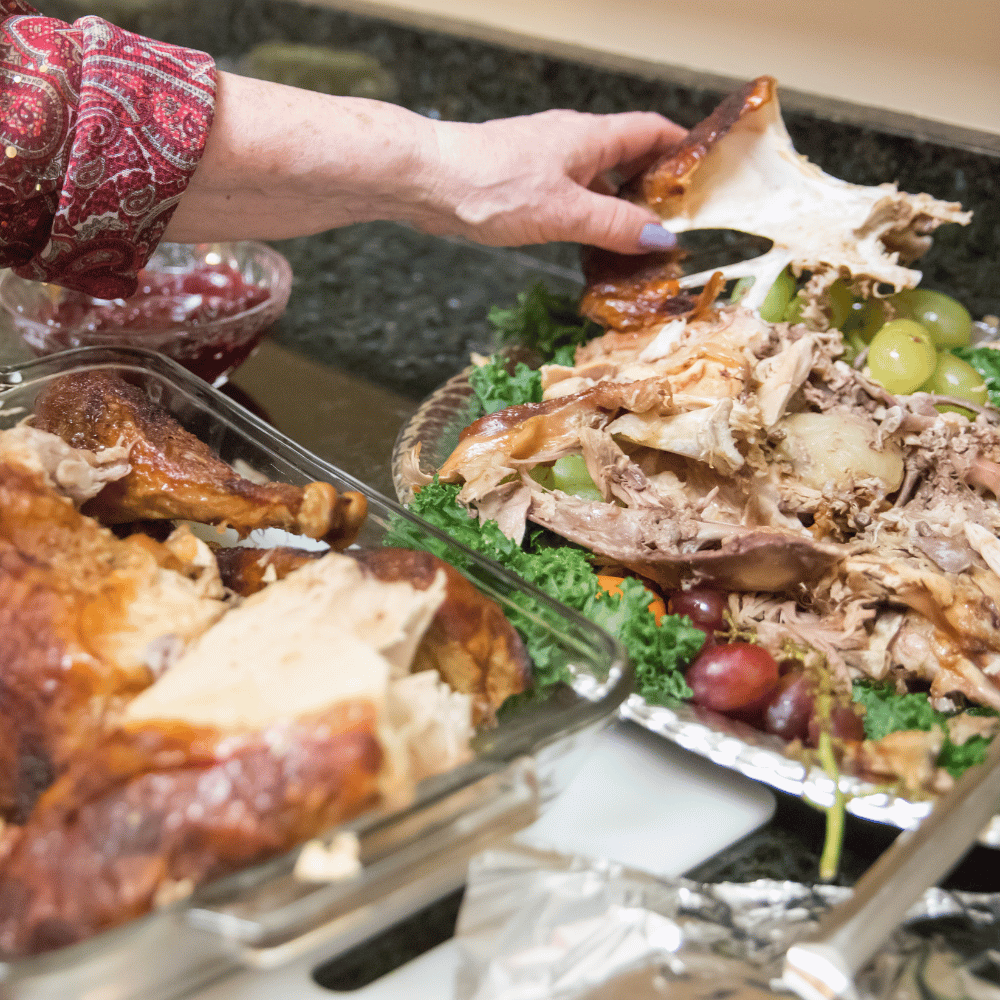
For cleaner slices, remove each breast half from the bone and slice it crosswise on a cutting board. Separate the legs and thighs at the joint, then arrange dark and white meat together on a warm platter. Spoon over a little warm pan juice just before serving if desired.
Small details that make the day easier
- Read the full recipe several days ahead and work backward from serving time.
- Check that your roasting pan fits both the turkey and the oven.
- Test your thermometer before the holiday; in ice water it should read close to 32°F.
- Keep raw turkey and its juices away from ready-to-eat foods, and wash hands, utensils, counters, and cutting boards thoroughly.
- Set aside extra stock for gravy; a pasture-raised bird may yield a different amount of pan drippings than expected.
- If the turkey finishes early, keep it safely hot at 140°F or above. For a long delay, carve and refrigerate it in shallow containers, then reheat to 165°F.
- Refrigerate leftovers within 2 hours. Use cooked turkey within 3 to 4 days, or freeze it for later.
All you need is a good turkey
The best Thanksgiving advice is wonderfully simple: thaw sooner than you think, season ahead, begin checking early, and trust the thermometer. A Pat’s Pastured turkey already brings rich flavor and a farm story to the table. Treat it with a little planning, and let the bird do the rest.